Technology and trust: stories from One Basin CRC’s next generation
news
Published 01 Dec 2025
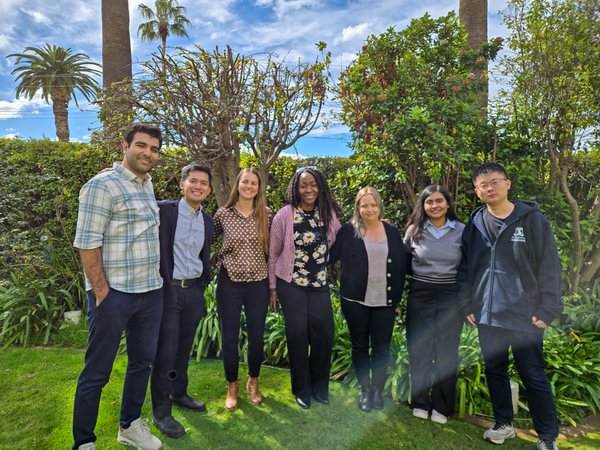
Over our lifespan, One Basin CRC will support 50 PhD candidates to undertake research projects spanning hydrology, social research, economics, and more. These researchers represent the next generation of leaders in their fields, and of the Murray–Darling Basin.
Authored by esteemed writer and storyteller Ralph Johnstone, the following profiles are part of an ongoing series showcasing our PhDs and their stories.
Lang Zheng: smarter solutions for irrigation
It’s a long way from the sweltering sidewalks of Hong Kong to the drying “Mediterranean” climate of Mildura – but for Lang Zheng, living the challenges of climate change up close is critical if you’re going to play a role in tackling them.
Lang, 28, has dramatically broadened his world-view since he was a research assistant at Hong Kong University, where he published four papers combining GIS and engineering data to help city planners address the impacts of a warming climate. Now, after a year of his PhD at the University of Melbourne, he’s arrived in Mildura to transfer this intricate knowledge of multilayered predictive modelling to rural irrigation systems.
Through AI predictive controls, Lang’s models have the potential to combine multiple location- and time-specific factors – from energy tariffs to climate forecasts and crop watering schedules – to help irrigation managers optimise their watering efficiencies. “Our main goal will be to help irrigators keep pumping costs down by finding the balance between local renewable energy sources, crop-specific water demands, evaporation rates, and other factors that impact watering rates,” he explains.
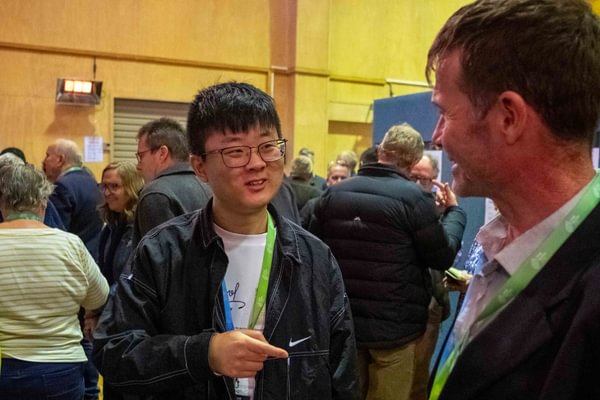
One Basin CRC has facilitated introductions and on-site visits to Lower Murray Water and other water utilities, so that Lang can align his models with their systems and operational strategies. He will also be undertaking an internship with SA Water. Ultimately, he believes, being able to undertake research in a regional area is critical to delivering a product that will prove practical to its intended users.
“Water utility managers still tend to rely on human expertise for scheduling pump operations, instead of using automated methods,” says Lang. “Collaborating with industry stakeholders will not only focus my research on real-world challenges, but will make my models relevant and applicable for actual water distribution systems.”
For me, studying and working in a regional hub provides more benefits than staying in an urban university. Regional hubs offer more opportunities to build connections with industry professionals, allowing for on-site visits and a deeper understanding of the challenges they face.
Lang Zheng
To learn more about Lang’s research, visit the project page.
Camaria Holder: a conversation for everyone
Watching communities around Australia struggle with increasing droughts, floods, fires and heatwaves only makes Camaria Holder more convinced that her chosen PhD topic is the right one. Camaria’s study aims to design better ‘participatory processes’ to help local people consider the likely impacts of climate change on their lives, as they bring their personal priorities and values to what’s likely to become the most urgent conversation of their lifetime.
Exploring the social side of water resources management has been a natural progression for this passionate Antiguan, who’s worked on community-led adaptation projects in the Eastern Caribbean, as well as a “pivotal” project to develop a series of water treatment plants for communities outside Port-au-Prince. “It involved my first ever focus groups, seated with villagers sampling cups of water and discussing what tasted like life,” says Camaria. “I left Haiti with a desire to better understand people and context in my future projects – and some years later it led me here.”
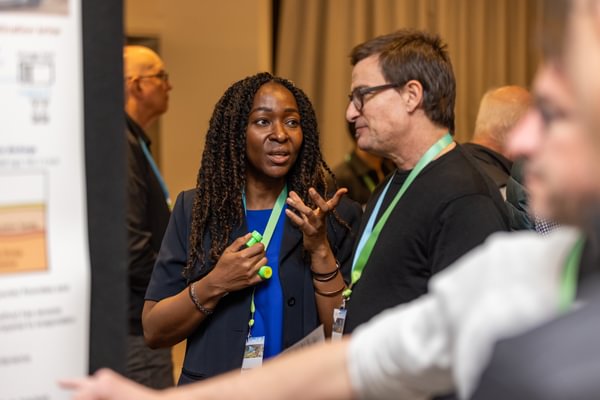
Now she’s learning alongside social scientists at ANU who’ve joined forces under One Basin’s umbrella with modellers and engineers from the Universities of Melbourne and Adelaide to develop a series of tools to analyse long-term climate scenarios and ‘stress test’ water use practices. Camaria plans to contribute to one of the project’s four case studies, in the Goulburn-Broken catchment – where stream-flows are among the most precarious in the basin – and the overall project will contribute to a 10-year regional waterway strategy being developed by the farsighted local Catchment Management Authority.
“I’m really happy to be getting in on the ground floor, and hopefully helping influence a small part of this process,” says Camaria. “My interest is in looking at how project facilitators can get buy-in from diverse groups of people who place different values on water – and have different ideas about its management – but must all have a voice if there’s going to be genuinely inclusive planning.”
I believe that finding ways to collaborate and establish cross-sectoral understanding is essential for designing sustainable adaptation interventions. I think we’re often unaware of the bubbles we inhabit, or sometimes we’re way too comfortable with our own worldview – but being able to understand and then leverage the plurality of perspectives that naturally inhabit the world will only benefit us as we plan for the next decade and beyond.
Camaria Holder
To learn more about Camaria’s research, visit the project page.